What is Surah Al-Waqiah?
Surah Al-Waqiah is the 56th chapter of the Holy Quran. It has 96 verses and was revealed in Makkah. The name “Al-Waqiah” means The Inevitable Event — referring to the Day of Judgment, which is certain to come.
This Surah is known as one of the most powerful chapters in the Quran. It talks about what will happen on the Day of Judgment, how people will be divided into three groups, and what Allah has prepared for those who believe.
Many Muslims recite Surah Al-Waqiah every night before sleeping. The reason is simple — it is narrated that the Prophet Muhammad ﷺ said:
“Whoever recites Surah Al-Waqiah every night will never be afflicted by poverty.” — (Ibn Kathir, narrated by Abdullah Ibn Masud رضي الله عنه)
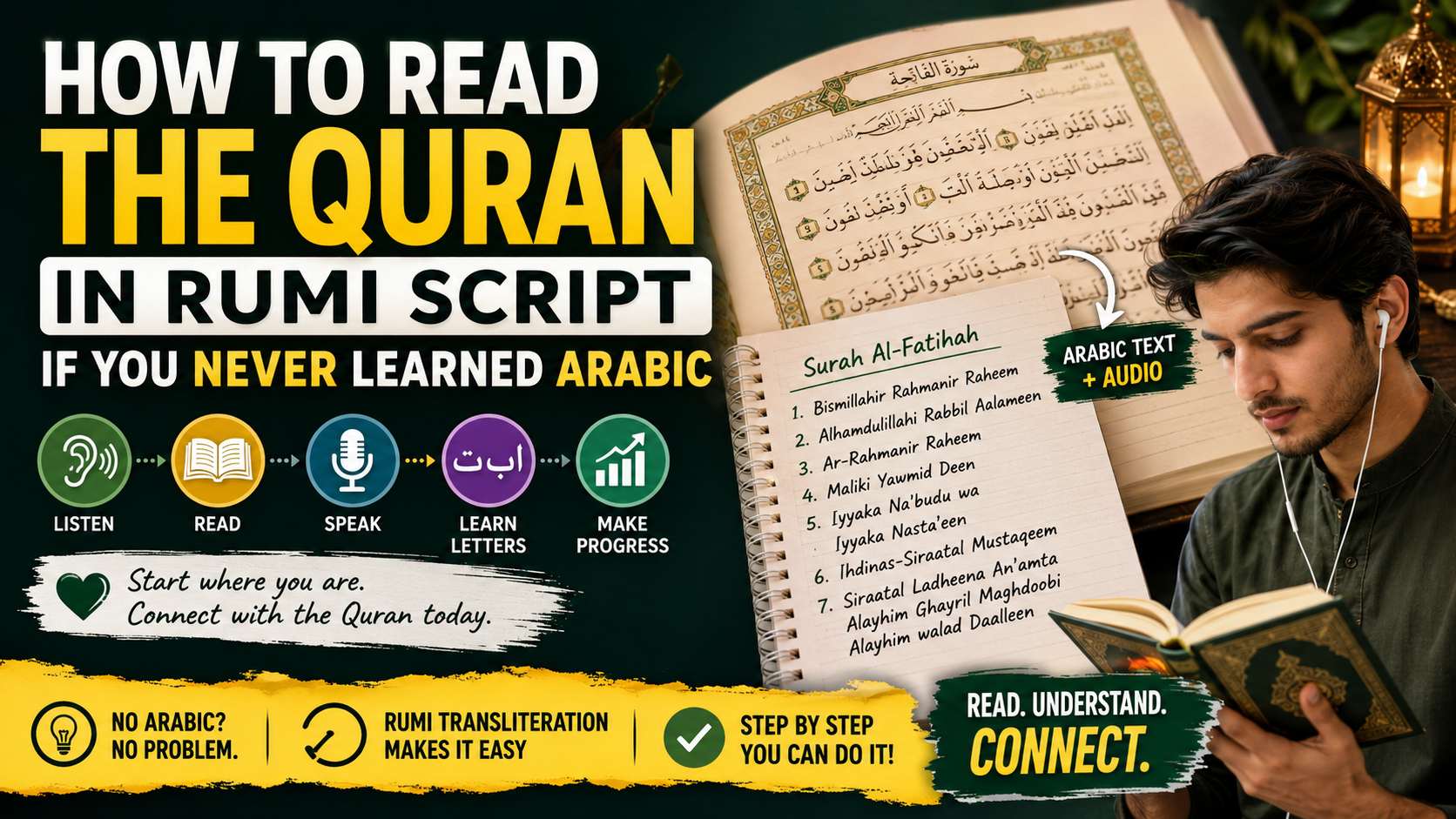
That is why so many people are looking to read it regularly — and for those who find Arabic difficult, the Rumi transliteration makes it much easier.
Surah Al-Waqiah — Three Groups of People
Before reading, it helps to understand what this Surah is about.
On the Day of Judgment, all of humanity will be divided into three groups:
- As-Sabiqoon (The Foremost) — Those who were first in faith and good deeds. They will be in the highest ranks in Jannah.
- Ashaab Al-Yameen (Companions of the Right) — The righteous believers. They will also enter Jannah with great rewards.
- Ashaab Al-Shimaal (Companions of the Left) — Those who rejected the truth. They will face punishment.
This Surah describes each group in detail — what they will experience, what they will see, and what Allah has prepared for them. Reading it is a reminder of where we want to be.
Surah Al-Waqiah Rumi Transliteration — Full Text
Bismillaahir Rahmaanir Raheem بِسْمِ اللَّهِ الرَّحْمَٰنِ الرَّحِيمِ In the name of Allah, the Most Gracious, the Most Merciful.
Verse 1 إِذَا وَقَعَتِ ٱلْوَاقِعَةُ Iza waqa’atil waqi’ah When the Inevitable Event occurs,
Verse 2 لَيْسَ لِوَقْعَتِهَا كَاذِبَةٌ Laysa liwaq’atiha kazibah There is, at its occurrence, no denial.
Verse 3 خَافِضَةٌ رَّافِعَةٌ Khafidatur rafi’ah It will bring down some and raise up others.
Verse 4 إِذَا رُجَّتِ ٱلْأَرْضُ رَجًّا Izar rujjatil ardu rajja When the earth is shaken with a great shaking,
Verse 5 وَبُسَّتِ ٱلْجِبَالُ بَسًّا Wa bussatil jibalu bassa And the mountains are crumbled to dust,
Verse 6 فَكَانَتْ هَبَآءً مُّنۢبَثًّا Fakanat haba’am mumbastha And they become scattered dust,
Verse 7 وَكُنتُمْ أَزْوَٰجًا ثَلَٰثَةً Wa kuntum azwajan thalatha And you will be of three kinds.
Verse 8 فَأَصْحَٰبُ ٱلْمَيْمَنَةِ مَآ أَصْحَٰبُ ٱلْمَيْمَنَةِ Fa as’habul maimanati ma as’habul maimanah The companions of the right — what are the companions of the right?
Verse 9 وَأَصْحَٰبُ ٱلْمَشْـَٔمَةِ مَآ أَصْحَٰبُ ٱلْمَشْـَٔمَةِ Wa as’habul mash’amati ma as’habul mash’amah And the companions of the left — what are the companions of the left?
Verse 10 وَٱلسَّٰبِقُونَ ٱلسَّٰبِقُونَ Was sabiqoonas sabiqoon And the foremost — they are the foremost.
Verse 11 أُو۟لَٰٓئِكَ ٱلْمُقَرَّبُونَ Ula’ikal muqarraboon Those are the ones brought nearest to Allah.
Verse 12 فِى جَنَّٰتِ ٱلنَّعِيمِ Fi jannatin na’eem In the Gardens of Delight.
Verse 13 ثُلَّةٌ مِّنَ ٱلْأَوَّلِينَ Thullatum minal awwaleen A large group from the former peoples,
Verse 14 وَقَلِيلٌ مِّنَ ٱلْءَاخِرِينَ Wa qaleelum minal akhireen And a few from the later peoples.
Verse 15 عَلَىٰ سُرُرٍ مَّوْضُونَةٍ ‘Ala sururim mawdoonah On thrones woven with gold,
Verse 16 مُّتَّكِـِٔينَ عَلَيْهَا مُتَقَٰبِلِينَ Muttaki’eena ‘alayha mutaqabileen Reclining on them, facing each other.
Verse 17 يَطُوفُ عَلَيْهِمْ وِلْدَٰنٌ مُّخَلَّدُونَ Yatoofu ‘alayhim wildanum mukhalladoon There will circulate among them young boys made eternal,
Verse 18 بِأَكْوَابٍ وَأَبَارِيقَ وَكَأْسٍ مِّن مَّعِينٍ Bi’akwabiw wa abareeka wa ka’sim mim ma’een With vessels, pitchers, and a cup of clear wine,
Verse 19 لَّا يُصَدَّعُونَ عَنْهَا وَلَا يُنزِفُونَ La yusadda’oona ‘anha wa la yunzifoon From which they will not get a headache, nor will they be intoxicated.
Verse 20 وَفَٰكِهَةٍ مِّمَّا يَتَخَيَّرُونَ Wa fakihatim mimma yatakhayyaroon And fruit of what they select,
Verse 21 وَلَحْمِ طَيْرٍ مِّمَّا يَشْتَهُونَ Wa lahmi tayrim mimma yashtahoon And the meat of fowl, whatever they desire.
Verse 22 وَحُورٌ عِينٌ Wa hoorun ‘een And fair women with large, beautiful eyes,
Verse 23 كَأَمْثَٰلِ ٱللُّؤْلُؤِ ٱلْمَكْنُونِ Ka’amthalil lu’lu’il maknoon The likenesses of pearls well-protected.
Verse 24 جَزَآءًۢ بِمَا كَانُوا۟ يَعْمَلُونَ Jaza’am bima kanu ya’maloon As reward for what they used to do.
Verse 25 لَا يَسْمَعُونَ فِيهَا لَغْوًا وَلَا تَأْثِيمًا La yasma’oona feeha laghwaw wa la ta’theema They will not hear therein any ill speech or commission of sin,
Verse 26 إِلَّا قِيلًا سَلَٰمًا سَلَٰمًا Illa qeelan salaman salama Only a saying of peace, peace.
Verse 27 وَأَصْحَٰبُ ٱلْيَمِينِ مَآ أَصْحَٰبُ ٱلْيَمِينِ Wa as’habul yameeni ma as’habul yameen The companions of the right — what are the companions of the right?
Verse 28 فِى سِدْرٍ مَّخْضُودٍ Fee sidrim makhdood They will be among lote trees with thorns removed,
Verse 29 وَطَلْحٍ مَّنضُودٍ Wa talhin mandood And banana trees layered with fruit,
Verse 30 وَظِلٍّ مَّمْدُودٍ Wa dhillim mamdood And shade extended,
Verse 31 وَمَآءٍ مَّسْكُوبٍ Wa ma’im maskob And water poured out,
Verse 32 وَفَٰكِهَةٍ كَثِيرَةٍ Wa fakihatin katheerah And fruit, abundant,
Verse 33 لَّا مَقْطُوعَةٍ وَلَا مَمْنُوعَةٍ La maqtoo’atiw wa la mamno’ah Neither limited nor forbidden,
Verse 34 وَفُرُشٍ مَّرْفُوعَةٍ Wa furushim marfoo’ah And elevated beds.
Verse 35 إِنَّآ أَنشَأْنَٰهُنَّ إِنشَآءً Inna ansha’nahunna insha’a Indeed, We have produced the women of Paradise in a new creation,
Verse 36 فَجَعَلْنَٰهُنَّ أَبْكَارًا Faja’alnahunna abkara And made them virgins,
Verse 37 عُرُبًا أَتْرَابًا ‘Uruban atraba Devoted, and of equal age,
Verse 38 لِّأَصْحَٰبِ ٱلْيَمِينِ Li as’habil yameen For the companions of the right.
Verse 39 ثُلَّةٌ مِّنَ ٱلْأَوَّلِينَ Thullatum minal awwaleen A large group from the former peoples,
Verse 40 وَثُلَّةٌ مِّنَ ٱلْءَاخِرِينَ Wa thullatum minal akhireen And a large group from the later peoples.
Verse 41 وَأَصْحَٰبُ ٱلشِّمَالِ مَآ أَصْحَٰبُ ٱلشِّمَالِ Wa as’habush shimalima as’habush shimal The companions of the left — what are the companions of the left?
Verse 42 فِى سَمُومٍ وَحَمِيمٍ Fee samoomin wa hameem They will be in scorching fire and scalding water,
Verse 43 وَظِلٍّ مِّن يَحْمُومٍ Wa dhillim miy yahmoom And a shade of black smoke,
Verse 44 لَّا بَارِدٍ وَلَا كَرِيمٍ La baridin wa la kareem Neither cool nor beneficial.
Verse 45 إِنَّهُمْ كَانُوا۟ قَبْلَ ذَٰلِكَ مُتْرَفِينَ Innahum kanu qabla dhalika mutrafeen Indeed, they were, before that, indulging in luxury,
Verse 46 وَكَانُوا۟ يُصِرُّونَ عَلَى ٱلْحِنثِ ٱلْعَظِيمِ Wa kanu yusirrona ‘alal hinthil ‘adheem And they persisted in the great sin,
Verse 47 وَكَانُوا۟ يَقُولُونَ أَئِذَا مِتْنَا وَكُنَّا تُرَابًا وَعِظَٰمًا أَءِنَّا لَمَبْعُوثُونَ Wa kanu yaqooloona a’idha mitnna wa kunna turaba wa ‘idhamana ‘inna lamab’oothoon And they used to say, “When we have died and become dust and bones, will we indeed be resurrected?”
Verse 48 أَوَءَابَآؤُنَا ٱلْأَوَّلُونَ Awa aba’unal awwaloon And our forefathers as well?
Verse 49 قُلْ إِنَّ ٱلْأَوَّلِينَ وَٱلْءَاخِرِينَ Qul innal awwaleena wal akhireen Say, “Indeed, the former and the later peoples”
Verse 50 لَمَجْمُوعُونَ إِلَىٰ مِيقَٰتِ يَوْمٍ مَّعْلُومٍ Lamajmoo’oona ila meeqati yawmim ma’loom “Will surely be gathered together for the appointment of a known Day.”
Verse 51 ثُمَّ إِنَّكُمْ أَيُّهَا ٱلضَّآلُّونَ ٱلْمُكَذِّبُونَ Thumma innakum ayyuhad dallooonal mukadhiboon Then indeed you, O those astray who deny,
Verse 52 لَءَاكِلُونَ مِن شَجَرٍ مِّن زَقُّومٍ La’akiloona min shajarin min zaqqoom Will eat from trees of zaqqum,
Verse 53 فَمَالِـُٔونَ مِنْهَا ٱلْبُطُونَ Famali’oona minhal butoon And fill your bellies with it,
Verse 54 فَشَٰرِبُونَ عَلَيْهِ مِنَ ٱلْحَمِيمِ Fasharibuna ‘alayhi minal hameem And drink on top of it from scalding water,
Verse 55 فَشَٰرِبُونَ شُرْبَ ٱلْهِيمِ Fasharibuna shurbal heem Drinking as the thirsty camel drinks.
Verse 56 هَٰذَا نُزُلُهُمْ يَوْمَ ٱلدِّينِ Hadha nuzuluhum yawmad deen That is their accommodation on the Day of Recompense.
Verse 57 نَحْنُ خَلَقْنَٰكُمْ فَلَوْلَا تُصَدِّقُونَ Nahnu khalaqnakum falaw la tusaddiqoon We created you, so why do you not believe?
Verse 58 أَفَرَءَيْتُم مَّا تُمْنُونَ Afara’aytum ma tumnoon Have you seen that which you emit?
Verse 59 ءَأَنتُمْ تَخْلُقُونَهُۥٓ أَمْ نَحْنُ ٱلْخَٰلِقُونَ A’antum takhluqoonahu am nahnul khaliqoon Is it you who creates it, or are We the Creator?
Verse 60 نَحْنُ قَدَّرْنَا بَيْنَكُمُ ٱلْمَوْتَ وَمَا نَحْنُ بِمَسْبُوقِينَ Nahnu qaddarna baynakumul mawta wa ma nahnu bimasbooqeen We have decreed death among you, and We are not to be outdone.
Verse 61 عَلَىٰٓ أَن نُّبَدِّلَ أَمْثَٰلَكُمْ وَنُنشِئَكُمْ فِى مَا لَا تَعْلَمُونَ ‘Ala an nubaddila amthalakum wa nunshi’akum fee ma la ta’lamoon In that We will change your likenesses and produce you in that form which you do not know.
Verse 62 وَلَقَدْ عَلِمْتُمُ ٱلنَّشْأَةَ ٱلْأُولَىٰ فَلَوْلَا تَذَكَّرُونَ Wa laqad ‘alimtumun nash’atal oola falaw la tazakkaroon And you have already known the first creation, so will you not remember?
Verse 63 أَفَرَءَيْتُم مَّا تَحْرُثُونَ Afara’aytum ma tahrusthoon And have you seen that which you sow?
Verse 64 ءَأَنتُمْ تَزْرَعُونَهُۥٓ أَمْ نَحْنُ ٱلزَّٰرِعُونَ A’antum tazra’oonahu am nahnuz zari’oon Is it you who makes it grow, or are We the grower?
Verse 65 لَوْ نَشَآءُ لَجَعَلْنَٰهُ حُطَٰمًا فَظَلْتُمْ تَفَكَّهُونَ Law nasha’u laja’alnahu hutaman fadhaltum tafakkahoon If We willed, We could make it dry debris, and you would be left wondering,
Verse 66 إِنَّا لَمُغْرَمُونَ Inna lamugramoon “Indeed, we are in debt,”
Verse 67 بَلْ نَحْنُ مَحْرُومُونَ Bal nahnu mahroomoon Rather, we are deprived.
Verse 68 أَفَرَءَيْتُمُ ٱلْمَآءَ ٱلَّذِى تَشْرَبُونَ Afara’aytumul ma’al lazi tashraboon And have you seen the water that you drink?
Verse 69 ءَأَنتُمْ أَنزَلْتُمُوهُ مِنَ ٱلْمُزْنِ أَمْ نَحْنُ ٱلْمُنزِلُونَ A’antum anzaltumoohu minal muzni am nahnul munziloon Is it you who brought it down from the clouds, or is it We who bring it down?
Verse 70 لَوْ نَشَآءُ جَعَلْنَٰهُ أُجَاجًا فَلَوْلَا تَشْكُرُونَ Law nasha’u ja’alnahu ujajan falaw la tashkuroon If We willed, We could make it bitter, so why are you not grateful?
Verse 71 أَفَرَءَيْتُمُ ٱلنَّارَ ٱلَّتِى تُورُونَ Afara’aytumun naral lati tooroon And have you seen the fire that you ignite?
Verse 72 ءَأَنتُمْ أَنشَأْتُمْ شَجَرَتَهَآ أَمْ نَحْنُ ٱلْمُنشِـُٔونَ A’antum ansha’tum shajarataha am nahnul munshi’oon Is it you who produced its tree, or are We the producer?
Verse 73 نَحْنُ جَعَلْنَٰهَا تَذْكِرَةً وَمَتَٰعًا لِّلْمُقْوِينَ Nahnu ja’alnaha tazkirataw wa mata’al lilmuqween We have made it a reminder and provision for the travelers,
Verse 74 فَسَبِّحْ بِٱسْمِ رَبِّكَ ٱلْعَظِيمِ Fasabbih bismi rabbikal ‘adheem So exalt the name of your Lord, the Most Great.
Verse 75 فَلَآ أُقْسِمُ بِمَوَٰقِعِ ٱلنُّجُومِ Fala uqsimu bimawqi’in nujoom Then I swear by the setting of the stars,
Verse 76 وَإِنَّهُۥ لَقَسَمٌ لَّوْ تَعْلَمُونَ عَظِيمٌ Wa innahu laqasamul law ta’lamoona ‘adheem And indeed, it is an oath — if you could know — most great,
Verse 77 إِنَّهُۥ لَقُرْءَانٌ كَرِيمٌ Innahu laqur’anun kareem That this is indeed a noble Quran,
Verse 78 فِى كِتَٰبٍ مَّكْنُونٍ Fee kitabim maknoon In a Register well-protected,
Verse 79 لَّا يَمَسُّهُۥٓ إِلَّا ٱلْمُطَهَّرُونَ La yamassuhoo illal mutahharoon None touch it except the purified.
Verse 80 تَنزِيلٌ مِّن رَّبِّ ٱلْعَٰلَمِينَ Tanzeelum mir rabbil ‘alameen It is a revelation from the Lord of the worlds.
Verse 81 أَفَبِهَٰذَا ٱلْحَدِيثِ أَنتُم مُّدْهِنُونَ Afabihadhal hadeesi antum mudhinoon Then is it this statement that you take lightly?
Verse 82 وَتَجْعَلُونَ رِزْقَكُمْ أَنَّكُمْ تُكَذِّبُونَ Wa taj’aloona rizqakum annakum tukadhhiboon And you make it your livelihood that you deny?
Verse 83 فَلَوْلَآ إِذَا بَلَغَتِ ٱلْحُلْقُومَ Falaw la iza balagatil hulqoom Then why, when the soul at death reaches the throat,
Verse 84 وَأَنتُمْ حِينَئِذٍ تَنظُرُونَ Wa antum hee na’izin tandhuroon And you are at that moment looking on,
Verse 85 وَنَحْنُ أَقْرَبُ إِلَيْهِ مِنكُمْ وَلَٰكِن لَّا تُبْصِرُونَ Wa nahnu aqrabu ilayhi minkum wa lakin la tubsiroon And We are nearer to him than you are, but you do not see.
Verse 86 فَلَوْلَآ إِن كُنتُمْ غَيْرَ مَدِينِينَ Falaw la in kuntum ghayra madeeneen Then why do you not, if you are not to be recompensed,
Verse 87 تَرْجِعُونَهَآ إِن كُنتُمْ صَٰدِقِينَ Tarji’oonahaa in kuntum sadiqeen Bring it back, if you should be truthful?
Verse 88 فَأَمَّآ إِن كَانَ مِنَ ٱلْمُقَرَّبِينَ Fa amma in kana minal muqarrabeen And if the deceased was of those brought near to Allah,
Verse 89 فَرَوْحٌ وَرَيْحَانٌ وَجَنَّتُ نَعِيمٍ Farawhuw wa rayhanu wa jannatu na’eem Then rest and bounty and a garden of pleasure.
Verse 90 وَأَمَّآ إِن كَانَ مِنْ أَصْحَٰبِ ٱلْيَمِينِ Wa amma in kana min as’habil yameen And if he was of the companions of the right,
Verse 91 فَسَلَٰمٌ لَّكَ مِنْ أَصْحَٰبِ ٱلْيَمِينِ Fasalamul laka min as’habil yameen Then peace for you from the companions of the right.
Verse 92 وَأَمَّآ إِن كَانَ مِنَ ٱلْمُكَذِّبِينَ ٱلضَّآلِّينَ Wa amma in kana minal mukadhibeena adalleen But if he was of those who denied and went astray,
Verse 93 فَنُزُلٌ مِّنْ حَمِيمٍ Fanuzulum min hameem Then an accommodation of scalding water,
Verse 94 وَتَصْلِيَةُ جَحِيمٍ Wa tasliyatu jaheem And burning in hellfire.
Verse 95 إِنَّ هَٰذَا لَهُوَ حَقُّ ٱلْيَقِينِ Inna hadha lahuwa haqqul yaqeen Indeed, this is the true certainty.
Verse 96 فَسَبِّحْ بِٱسْمِ رَبِّكَ ٱلْعَظِيمِ Fasabbih bismi rabbikal ‘adheem So exalt the name of your Lord, the Most Great.
Benefits of Reciting Surah Al-Waqiah
Muslims have been reciting this Surah for centuries — not just because it is Quran, but because of specific narrations about its blessings.
Protection from Poverty Abdullah Ibn Masud رضي الله عنه narrated that he instructed his daughters to recite Surah Al-Waqiah every night. He had heard the Prophet ﷺ say that whoever recites it every night will never be struck by poverty. This is one of the most well-known narrations about this Surah.
Reminder of the Afterlife This Surah paints a very clear picture of what comes after death — the Day of Judgment, the three groups of people, and what each group will experience. Reading it regularly keeps the heart focused on what truly matters.
Spiritual Strength Abu Bakr As-Siddiq رضي الله عنه mentioned that Surah Al-Waqiah was one of the Surahs that caused gray hair to appear on the Prophet ﷺ — because of how seriously he took its message. It is a Surah that moves the heart deeply.
Ease at the Time of Death There is a narration that reciting Surah Al-Waqiah near a dying person brings ease and comfort in their final moments.
Best Time to Recite Surah Al-Waqiah
Every Night Before Sleeping — This is the most recommended time, based on the narration of Abdullah Ibn Masud رضي الله عنه. Many Muslims make it part of their bedtime routine.
After Maghrib or Isha Prayer — Reciting it after the night prayers is a common practice among scholars and righteous Muslims.
Any Time During the Day — There is no restriction. If you cannot read it at night, read it whenever you can. The intention and consistency matter most.
How Long Does It Take to Recite?
Surah Al-Waqiah has 96 verses. For someone reading at a moderate pace with the Rumi transliteration, it typically takes around 10 to 15 minutes. With practice, you will get faster.
If you find it hard to complete the full Surah at once, start with 10 verses a day and gradually increase. The important thing is to start.
Tips for Reading With Rumi Transliteration
Reading Rumi is a stepping stone — it helps you recite the Surah correctly even if you cannot read Arabic script yet.
Start by listening to the audio recitation first. Then follow along with the Rumi text while the audio plays. Repeat each verse a few times before moving to the next. Over time, your tongue will get used to the sounds naturally.
If you want to eventually read directly in Arabic, the Rumi method actually helps a lot. Because you are already familiar with the sounds and rhythm of the verses, learning the Arabic letters becomes much easier.
Frequently Asked Questions
Can I get reward for reading Surah Al-Waqiah in Rumi? Yes. Allah looks at your intention and effort. If you are reading the Rumi transliteration sincerely because you want to recite the Quran but find Arabic difficult, you will be rewarded for your effort insha’Allah. Scholars encourage using Rumi as a tool while also learning Arabic gradually.
Is it okay to read Surah Al-Waqiah without wudu? You can read from memory or from a screen without wudu. However, if you are holding a physical Quran, you should be in a state of wudu. A printed Rumi transliteration book is not a Quran, so the same strict rule does not apply — but maintaining wudu is always better.
How many verses does Surah Al-Waqiah have? Surah Al-Waqiah has 96 verses. It is the 56th chapter of the Holy Quran and was revealed in Makkah.
What does Al-Waqiah mean? Al-Waqiah means “The Inevitable Event” — referring to the Day of Judgment, which is certain to happen.
Can I recite Surah Al-Waqiah for rizq (provision)? Yes. Many Muslims recite it specifically for barakah in their rizq, based on the hadith of Abdullah Ibn Masud رضي الله عنه. The practice is well-established and widely recommended by scholars.
May Allah make Surah Al-Waqiah a source of light, protection, and barakah for you and your family. Ameen.
Note: Scholars differ on this narration’s authenticity — some grade it as weak (da’eef), while others accept it as good practice due to supporting narrations. Recite for its virtue and reward of good intention, not as a guaranteed promise.