Introduction
No human being can claim that he has fulfilled the complete right of worship of Allah. Even if a person spends his entire life in prayer and devotion, he can never fully repay Allah for His countless blessings. This is why the Prophet Muhammad ﷺ taught us humility, reminding us that worship should lead to submission, not pride.
Why Pride in Worship Is Dangerous
When a person begins to feel proud of his worship, he slowly drifts away from its true purpose. Worship is meant to bring closeness to Allah, not self-admiration. In reality, there is no one in this world who can say that he has perfectly fulfilled the right of worship, which is why continuous repentance is essential for every believer.
Sin and the Struggle of the Youth
Many sins are difficult to abandon, especially for young people who often feel trapped and believe they can no longer quit. However, what seems impossible for humans is extremely easy for Allah. When a servant sincerely turns toward Allah, He opens doors that were never imagined.
Hope in the Mercy of Allah
A believer should never lose hope in Allah’s mercy. We must constantly pray, “O Allah, save us from sins and grant us the strength to abandon them.” When a person truly understands the harm of something, he naturally stays away from it, just as people avoid fire, snakes, or electricity due to fear of harm.
Lessons from Everyday Examples
A snake may appear beautiful, yet no sensible person dares to hold it because of the danger involved. Similarly, when a believer firmly believes that sins lead to spiritual destruction, he develops a natural hatred for them and begins to distance himself.
The Powerful Impact of Istighfar
Istighfar (seeking forgiveness) is among the greatest acts of worship. Different people once approached a righteous scholar with different problems—some asked for rain, others for children, wealth, or relief from hardship. To everyone, he recommended the same solution: Istighfar. The Qur’an clearly states that through seeking forgiveness, sins are erased, sustenance increases, difficulties are removed, and Allah’s mercy descends.
Prayer and the Cleansing of Sins
Prayer washes away sins just as bathing five times a day cleanses the body from dirt. However, along with prayer, repentance and remembrance of Allah must continue so that the heart remains pure and alive.
The Greatest Deception of Satan
One of Satan’s biggest tricks is to whisper, “Since you cannot leave sins, what benefit do good deeds bring?” This thought is extremely dangerous. If sins are not leaving, abandoning good deeds causes even greater loss.
Why Good Deeds Must Never Be Abandoned
Just as heavily soiled clothes require more soap, a person burdened with many sins needs more repentance, more istighfar, and more good deeds. These righteous actions become the means through which Allah grants purification and guidance.
Conclusion
Islam teaches hope, not despair. A believer should continuously repent, frequently seek forgiveness, and never abandon good deeds. Through His infinite mercy, Allah forgives sins and transforms lives, granting purity, peace, and purpose to those who sincerely return to Him.
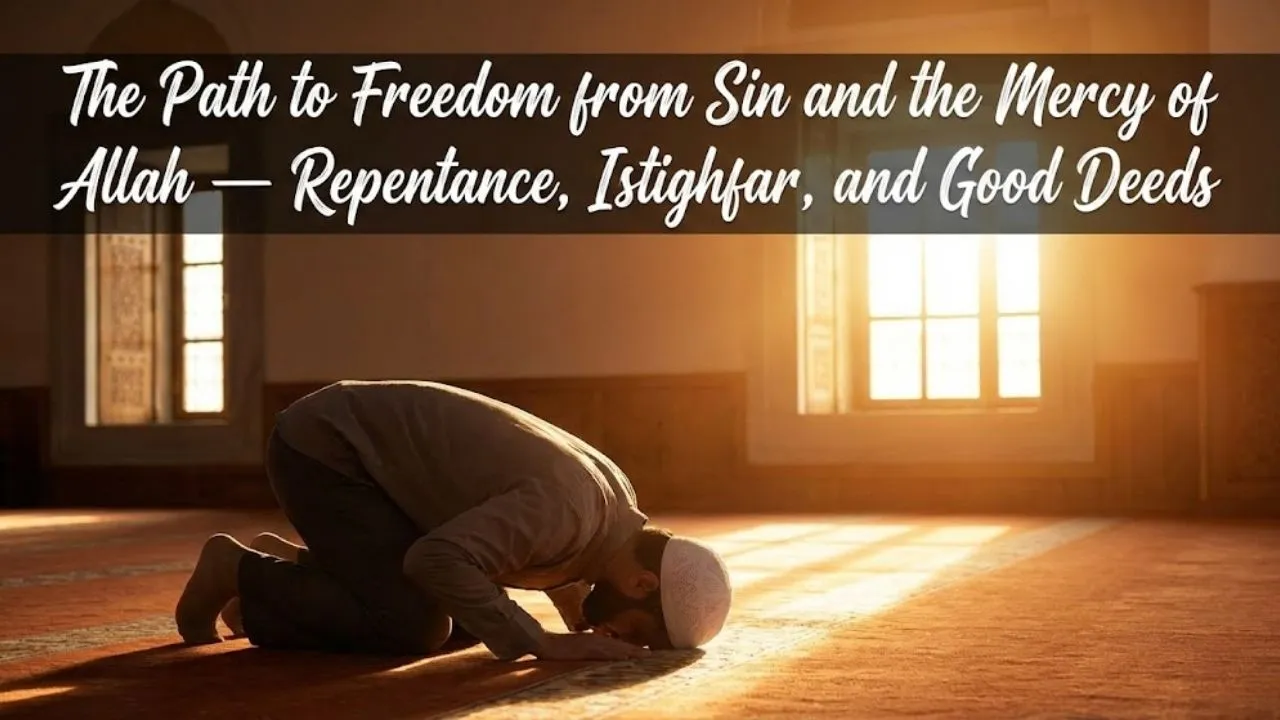
The Path to Freedom from Sin and the Mercy of Allah — Repentance, Istighfar, and Good Deeds
 By
/ January 15, 2026
By
/ January 15, 2026